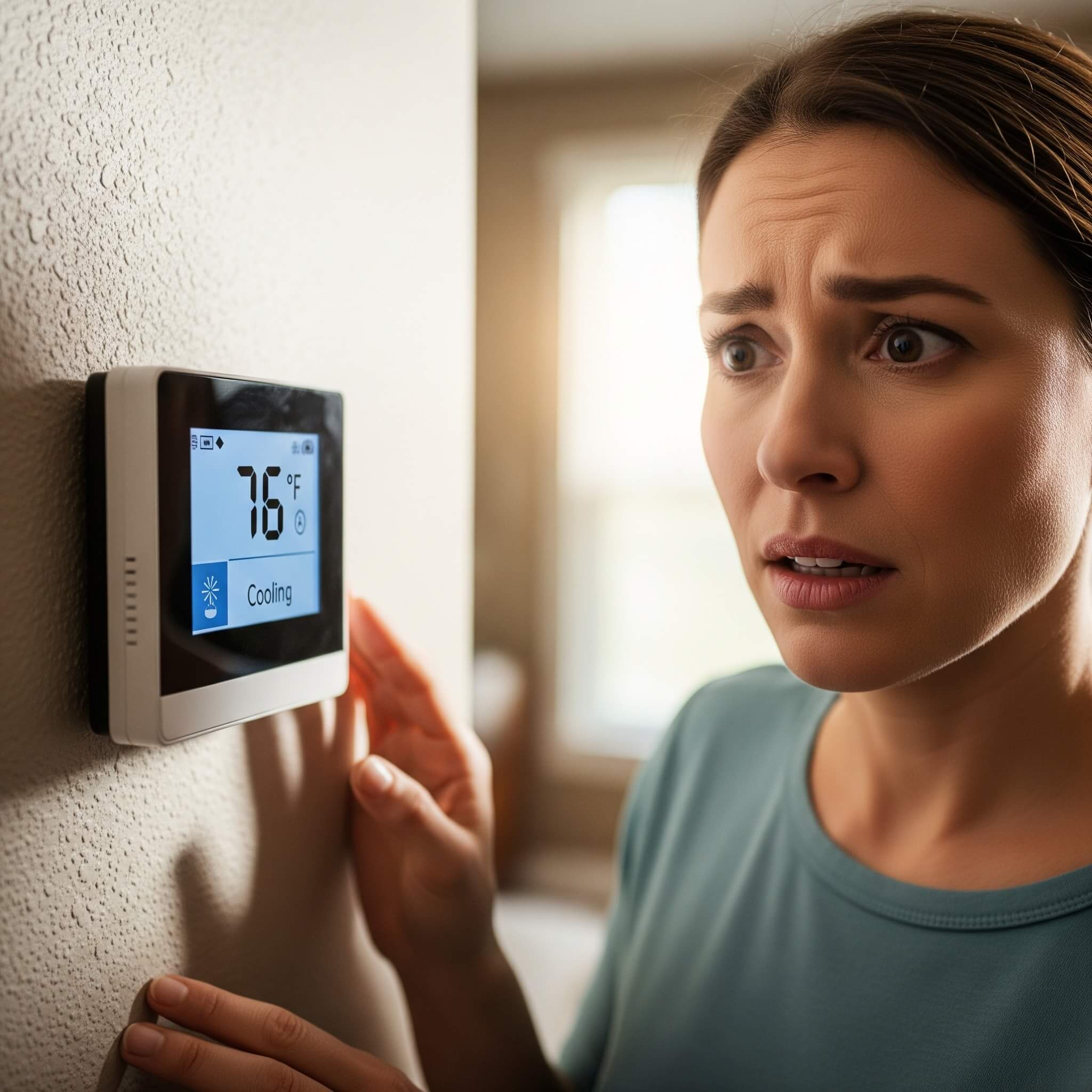
As April transitions into summer, Sarasota homeowners frequently experience a significant increase in FPL utility bills. This increase is primarily attributable to the efficiency rating of the installed air conditioning system. HVAC systems with a 10-SEER rating typically consume over 50% more electricity than modern high-efficiency units to maintain identical indoor temperatures.
Accurately determining the operational cost of your air conditioning system is essential for implementing effective strategies to reduce summer utility expenses as Florida temperatures rise.
How to Avoid that Huge May FPL Bill
3 Ways to Lower Your May Bill Right Now
Before you consider replacing your system, there are a few immediate steps you can take this April to reduce the workload on your AC and keep your FPL bill in check:
- Ditch the Thick Filters: Upgrading to a heavy, high-MERV filter might sound good for allergies, but it restricts airflow. Your system has to work twice as hard to pull air through a thick filter, driving up your energy usage. Switch to a standard MERV 8 filter and change it every 30 days during the summer.
- Utilize the “Wind Chill” Effect: Moving air feels cooler than still air. By running your ceiling fans counter-clockwise, you can comfortably raise your thermostat setting by 2 to 4 degrees (e.g., from 74°F to 78°F). According to the Department of Energy, this simple change can lower your cooling costs by up to 10%.
- Schedule a Spring Coil Cleaning: Even a fraction of an inch of dust or biological buildup on your indoor evaporator coil drastically reduces its ability to absorb heat. This forces your AC to run significantly longer to hit the target temperature. A professional spring tune-up cleans this coil, immediately restoring efficiency.
The Math Behind the Money
If you’ve done all the maintenance but your bills are still sky-high, you need to look at your system’s SEER2 (Seasonal Energy Efficiency Ratio). Think of it like the miles-per-gallon (MPG) rating for your car.
The Old Standard (10-12 SEER)
If your unit is older, it likely runs at a 10 to 12 SEER rating. This is the equivalent of driving a 1990s gas-guzzling SUV. It gets the house cold, but it burns a fortune in electricity to do it.
The New Standard (18+ SEER2)
The modern Variable-Speed Inverter systems we install operate at 18 to 20+ SEER2. This is like driving a modern hybrid vehicle. Instead of blasting at 100% power, a variable-speed Daikin Inverter compressor ramps up and down smoothly, using only the exact amount of electricity needed to maintain the temperature. The result? You keep your house at a comfortable 72 degrees, but you use a fraction of the power.
When tips and tricks aren’t enough to get that bill down to a reasonable amount, it’s time to upgrade. April is the optimal time to upgrade your AC system in advance of peak summer temperatures, maximizing both operational efficiency and cost savings.
How to Offset Your AC Costs
At D&D Air, we specialize in high-efficiency Daikin systems that literally pay for themselves in energy savings. Plus, we utilize the FPL Easy Payment Program, allowing you to finance your new system for $0 Down. In many cases, the massive drop in your monthly energy consumption completely covers the low monthly payment of the new equipment.
Use this April to get ahead of the summer heat and secure a lower FPL bill. Take advantage of our current $2,500 Instant Savings and 12-Year Parts & Labor Warranty by calling D&D Air today at (941) 297-0089 for a free energy analysis.